Home Projector Explained: A UK Buyer's Guide
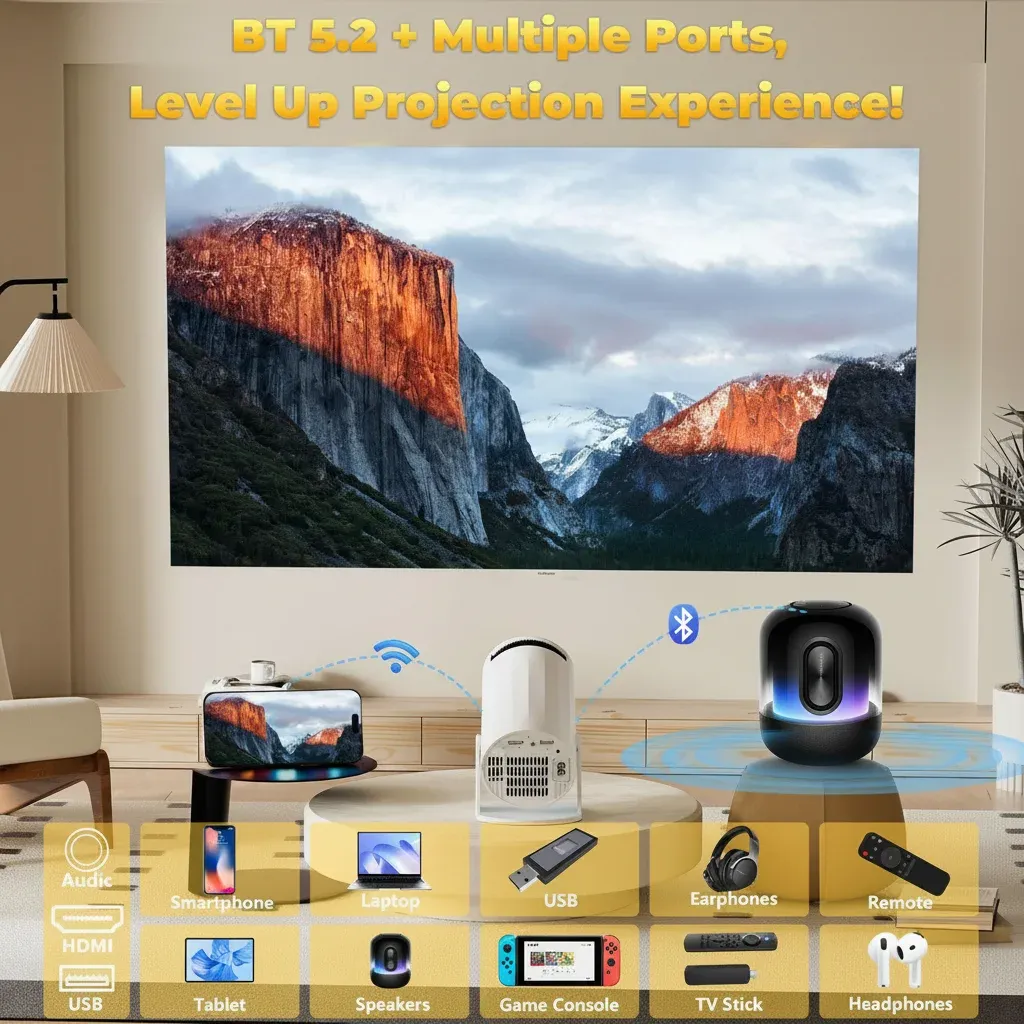
A good home projector can turn a spare wall, bedroom or living room into a proper big-screen setup without the footprint of a large television. For UK buyers, the challenge is not finding a projector; it is finding the right one for the way you actually watch: film nights, streaming, gaming, family use or portable viewing from room to room. This guide explains what a home projector is, which specifications matter, and how to choose one sensibly in the British market.
Key Takeaways
- A home projector is best chosen around room size, light levels, viewing distance and your main use, not headline specs alone.
- Native 1080P remains the practical sweet spot for most UK households, offering sharp detail without the higher cost of premium formats.
- WiFi 6 and simple setup matter if you want a smoother streaming experience and less cable clutter.
- Brightness, contrast, throw distance and speaker quality all affect real-world performance more than marketing claims.
- A portable smart model can be ideal for renters, smaller homes and anyone who wants a flexible 200-inch cinema feel without a permanent installation.
What is a home projector?
A home projector is a display device designed to cast video content onto a wall or screen at a much larger size than a typical television. In practice, that means you can watch films, sport, streaming services or games on an image that feels far more immersive, often without dedicating a whole wall to a fixed TV.
For many UK households, the appeal is straightforward: more screen, less bulk. A compact projector suits flats, box rooms, student accommodation, family lounges and bedrooms where a giant television would dominate the space. It also gives you flexibility. You can move it between rooms, store it away when not in use, or take it to a friend’s house for a match or film night.
XBJ Projector’s core appeal fits this use perfectly: the ultimate mini projector for big screen movie nights. A smart portable projector with native 1080P, WiFi 6 and simple setup is aimed at buyers who want a cinema feel without complicated installation.
Why home projectors are growing in popularity in the UK
British homes are not always built around vast entertainment rooms. Many people are working with limited space, shared living areas or rented properties. A home projector answers a practical problem: how do you get a larger picture without mounting a huge screen permanently?
Streaming habits have also changed expectations. Ofcom’s Media Nations reporting has consistently shown the dominance of streaming and on-demand viewing in the UK, with subscription video services now a normal part of home entertainment for millions of households. Source: Ofcom, Media Nations UK. As more viewing shifts to apps and wireless devices, buyers increasingly want display options that are portable, simple and suited to modern streaming.
That is where smart home projector models stand out. Instead of treating projection as a specialist AV hobby, they make it more accessible for ordinary households. If you are comparing wireless options, it is worth reading Wifi Projector Explained: A UK Buyer's Guide alongside this article.
Who should buy a home projector?
A home projector is a strong choice if you fit one or more of these situations:
- You want a large picture for films and sport without buying an oversized television.
- You live in a flat or rented home and do not want permanent wall mounting.
- You want a flexible setup for bedrooms, lounges, garden rooms or occasional use.
- You value portability and would like to move the projector around the house.
- You prefer a cleaner room layout with fewer large fixtures.
It can also be a sensible option for families. A projector can be brought out for movie nights and put away afterwards, leaving more room for day-to-day living. That is particularly useful in smaller British homes where one room often serves several purposes.
Home projector vs television: which makes more sense?
Televisions still win on convenience in bright rooms and for casual daytime viewing. Yet a home projector offers one thing that remains difficult to match affordably with a TV: scale. A projected image can make film nights feel more like an event rather than just another evening in front of the box.
When a television may be better
- Very bright rooms with strong daylight and limited control over curtains or blinds
- Heavy daytime viewing such as rolling news or background television
- Users who want a completely fixed, always-on display
When a home projector may be better
- Evening film watching and immersive streaming
- Homes where space is limited
- Renters who want a non-permanent solution
- Anyone who wants a large image at a more approachable cost
For many buyers, the answer is not projector or television, but projector for dedicated viewing and a smaller screen for everyday background use.
The key home projector specifications that actually matter
Many buyers get buried under technical language. To choose a home projector well, focus on the specifications that affect your experience in a normal UK home.
Native resolution
Native resolution tells you the actual detail the projector can display. For most buyers, native 1080P is the practical benchmark. It delivers clear films, streaming content and gaming visuals without the softness that can affect lower-resolution models.
This is one reason the XBJ positioning is sensible. Native 1080P is not just a marketing line; it is a real usability advantage when you want a large picture that still looks sharp at sensible viewing distances.
Brightness
Brightness affects how well the image stands up against ambient light. In the UK, many people use projectors in living rooms where full blackout is not always realistic, especially in summer when evenings stay lighter for longer. A brighter projector will generally give you a more usable image in these conditions.
Do keep expectations realistic: projectors nearly always look best in dimmer settings. If your main use is evening streaming and film nights, you will get the most satisfying result.
Contrast
Contrast influences the depth of the image, especially in dark scenes. Good contrast helps black areas look richer and prevents the picture from appearing washed out. It is particularly important for cinema-style use.
Throw distance and screen size
Throw distance is the space needed between the projector and the wall or screen. This matters in British homes where room sizes can be modest. Check how far back the projector needs to sit to create your preferred image size.
A model capable of transforming a room into a 200-inch cinema sounds impressive, but the right size depends on your space. Bigger is not always better if you are sitting too close or the wall area is limited.
Connectivity
Look for connections that suit modern use: WiFi, Bluetooth, HDMI and compatibility with streaming devices. Wireless connectivity is particularly useful if you want a cleaner setup or plan to move the projector often. If Bluetooth matters to you, see The Ultimate Guide to Bluetooth Projector in the UK for a closer look at pairing speakers and other devices.
Built-in speakers
Built-in speakers are convenient, especially in bedrooms or temporary setups. For casual use they may be enough on their own. If you want a fuller cinema effect, Bluetooth audio support can make it easy to pair a soundbar or speaker.
Ease of setup
This is often overlooked. A home projector that is awkward to position, slow to connect or fiddly to adjust tends to be used less. Simple setup matters if you want a projector that feels part of daily life rather than a weekend-only gadget.
Why WiFi 6 and smart features matter in a home projector
Wireless performance is one of the biggest differences between older projector expectations and what buyers now want. A modern home projector should fit around streaming habits, not force you into a maze of cables.
WiFi 6 can support more stable and responsive wireless performance in the right home network environment. For households streaming films, TV apps or mirrored content from phones and tablets, that can mean smoother playback and less frustration. It is especially useful in homes where several devices are already sharing bandwidth.
Smart functionality also reduces setup friction. Buyers increasingly expect a projector to behave more like a familiar entertainment device and less like a specialist office tool. If this is a priority, our related guide on Projector Explained: A UK Buyer's Guide provides useful background on core projector categories.
How to choose the right home projector for your room
The best home projector is the one that suits your room and habits. Use this quick framework before you buy.
1. Measure the wall or screen space
Work out the maximum image size your room can comfortably handle. Leave enough border space so the picture does not feel cramped by furniture or alcoves.
2. Check viewing distance
If you sit quite close, a giant image may be less comfortable than you expect. Native 1080P helps, though balance still matters.
3. Think about light control
If you mostly watch in the evening with curtains drawn, you have more flexibility. If your room is bright for much of the day, prioritise brightness and manage expectations.
4. Decide whether portability matters
If you want to move the projector between bedroom, lounge and holiday accommodation, size and setup simplicity become far more important.
5. Consider sound
For occasional use, built-in speakers may do the job. For regular film nights, Bluetooth speaker support is worth having. You can read more about this in The Ultimate Guide to Bluetooth Projector in the UK.
Common mistakes UK buyers make when choosing a home projector
- Buying on claimed image size alone. A 200-inch capability is useful, but only if your room supports it and the picture remains comfortable to watch.
- Ignoring room brightness. A projector used in a sunlit lounge at midday will not perform like one used for evening cinema viewing.
- Confusing supported resolution with native resolution. Native 1080P is what matters for actual image sharpness.
- Overlooking wireless features. If you stream regularly, WiFi quality affects daily satisfaction.
- Choosing a model that is too awkward to set up. A simple projector gets used more often.
Practical UK buying considerations: safety, compliance and household use
When buying electrical entertainment products in the UK, it is sensible to check for clear product information, warranty support and compliance details relevant to the UK market. A reputable retailer should be transparent about power compatibility, returns and after-sales support.
If the projector will be used around children, think about cable management, safe placement and ventilation. Do not block vents or place the unit on unstable soft furnishings. If anyone in the household has photosensitive epilepsy or related medical concerns, follow general screen-use advice and seek medical guidance where appropriate. The NHS provides health information on screen-related triggers and wellbeing, which can be useful for families managing these issues.
For renters and students, portability can also be a practical safety benefit. A smaller home projector is easier to store securely and less likely to require drilling, brackets or a permanent fixture.
What makes a good home projector for movie nights?
Movie nights are where a home projector earns its place. The best experience usually comes from a combination of factors rather than one standout specification.
- Sharp native 1080P detail for clean faces, subtitles and scenic shots
- Enough brightness for your room conditions
- Good contrast for richer dark scenes
- Simple wireless setup so watching feels effortless
- Portable design if you do not want a fixed entertainment corner
A home projector should make film night easier to start, not harder. If it takes ten minutes of cable swapping and menu hunting every time, most households will use it less than they intended.
That is why the XBJ proposition works naturally in this category. The emphasis on a smart portable design, native 1080P, WiFi 6 and straightforward setup speaks to how British households actually use a home projector: quickly, flexibly and often in rooms with multiple purposes.
Is a mini home projector enough for everyday use?
For many buyers, yes. A mini home projector is no longer just a novelty device. The better models are capable of delivering a strong everyday viewing experience, especially if your routine centres on evening streaming, weekend films and occasional gaming.
The main advantage is freedom. You can place it where it works best, rather than organising the whole room around one giant screen. In smaller UK homes, that flexibility has genuine value.
If you want to understand where wireless and portable features fit into the wider category, you may also find Wifi Projector Explained: A UK Buyer's Guide useful.
How XBJ Projector fits the modern home projector market
XBJ Projector is positioned around a clear and practical promise: The Ultimate Mini Projector for Big Screen Movie Nights. That message aligns with what many UK buyers are looking for right now. They want a projector that is compact enough to live with, smart enough for modern streaming, and powerful enough to create a genuinely cinematic image.
The combination of native 1080P, WiFi 6 and simple setup addresses the core concerns covered in this guide. Native resolution supports picture quality. Wireless capability supports modern viewing habits. Straightforward setup supports actual usage, which is where many devices succeed or fail in the home.
Ready to choose a home projector?
If you want a flexible big-screen experience without the hassle of a permanent installation, a smart portable home projector is a practical place to start. For film nights, streaming and everyday versatility, XBJ Projector is built around the features most households genuinely use.
Explore the XBJ Projector range and find the right home projector for your space.
If you are still comparing options, our deeper guides can help you narrow it down: The Ultimate Guide to Bluetooth Projector in the UK and Projector Explained: A UK Buyer's Guide.
Frequently Asked Questions
Is a home projector better than a TV in the UK?
It depends on your room and viewing habits. A home projector is often better for large-screen evening viewing, film nights and flexible setups in smaller homes. A TV is usually better for bright-room daytime use and constant background viewing.
What resolution should I look for in a home projector?
For most buyers, native 1080P is the best balance of picture quality and value. It provides a noticeably sharper image than lower native resolutions, especially on larger projected pictures.
Can I use a home projector in a living room with some daylight?
Yes, though performance is generally best in dimmer conditions. If your lounge has some ambient light, choose a brighter projector and use curtains or blinds where possible for the best image quality.
Are portable home projectors good enough for movie nights?
Yes, if you choose a model with the right fundamentals: native 1080P, decent brightness, reliable connectivity and easy setup. A well-designed portable projector can deliver an excellent movie-night experience in a typical UK home.
Ready to upgrade your movie nights with XBJ Projector?
Get Yours Now — £19.99